

Amish furniture is known for long-term durability, consistent build quality, and careful attention to materials. The difference is not only in the style, but in the process. We at Twin Brook Furniture highlight this approach by offering handcrafted Amish furniture that is made with care and attention to detail.
Below is a step-by-step look at how Amish furniture is made, framed around the choices and standards we hold at Twin Brook Furniture.
The Process Begins with Hardwood Selection and Board Grading
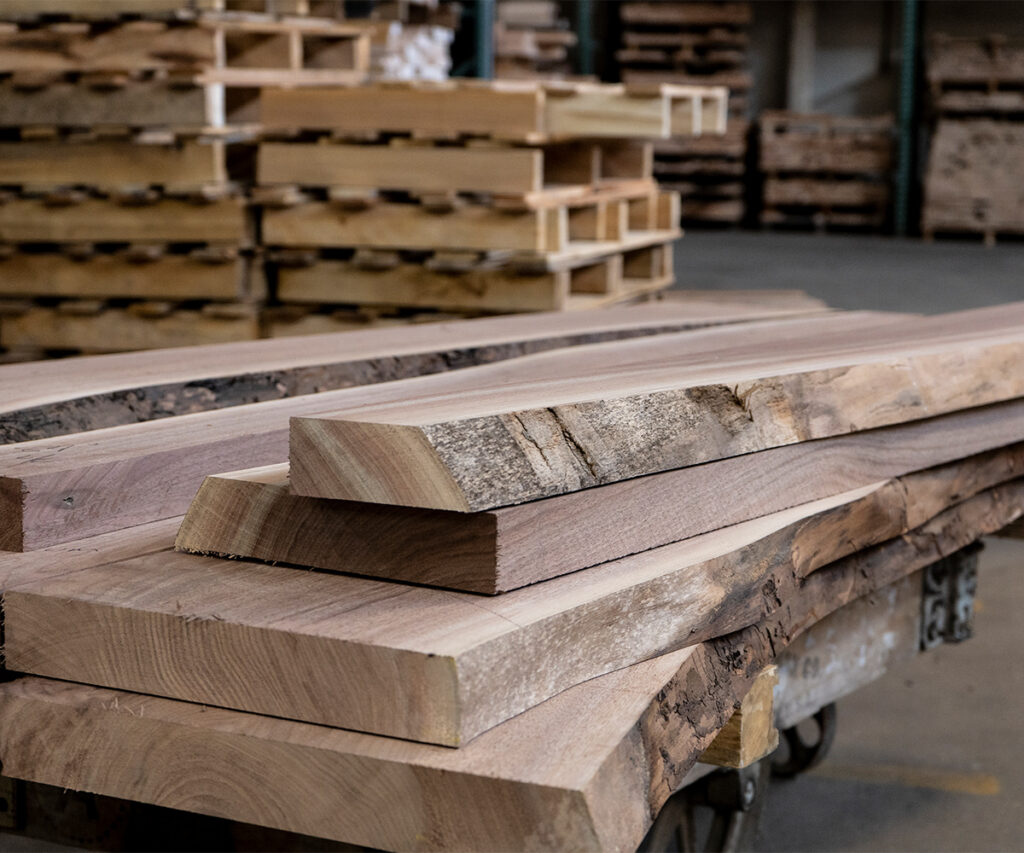
High-quality furniture starts with the right lumber. Amish shops typically work with solid hardwoods. Craftsmen sort boards for grain consistency and structural soundness, and reserve the best pieces.
This early stage affects how well furniture holds its shape over time and determines the overall uniformity of the finished piece.
Drying and Conditioning are Essential for Stability
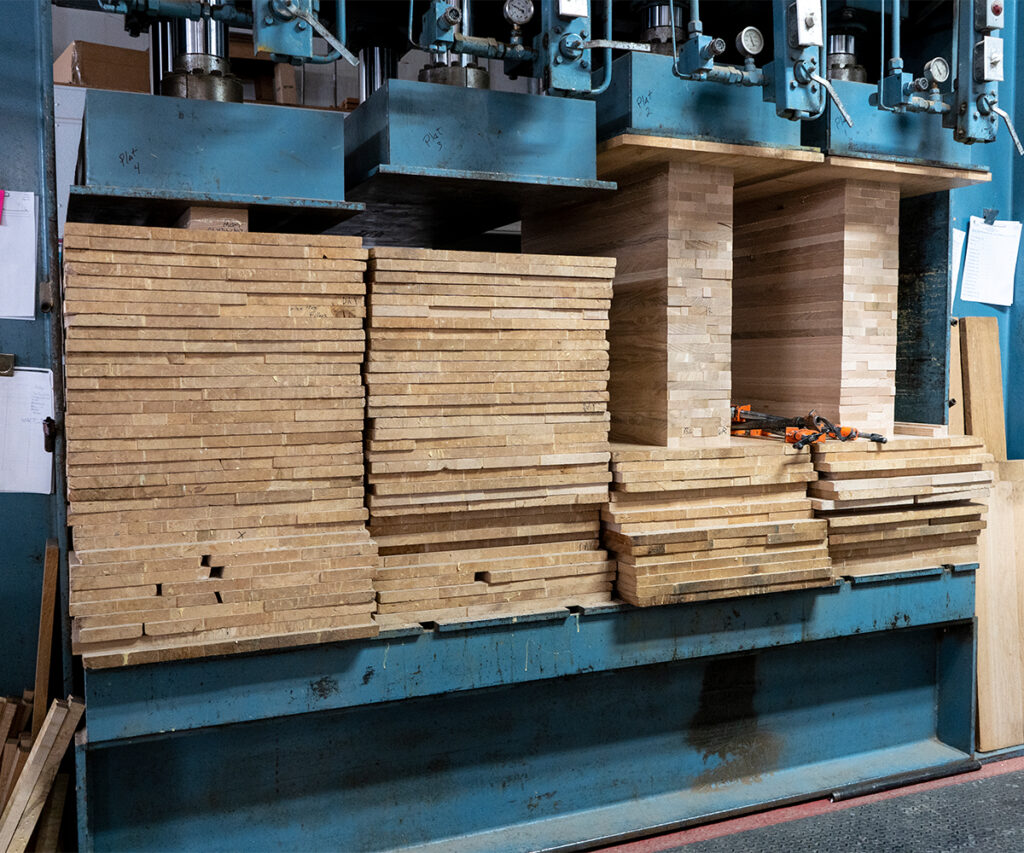
Wood naturally expands and contracts with changes in humidity. Amish builders pay close attention to moisture content before construction to limit future damage. Properly dried lumber is one of the key reasons Amish furniture tends to remain stable through seasonal changes.
This step is easy to overlook because it happens long before assembly, but it strongly impacts the quality and performance of the furniture.
Milling Converts Boards into Precise Components
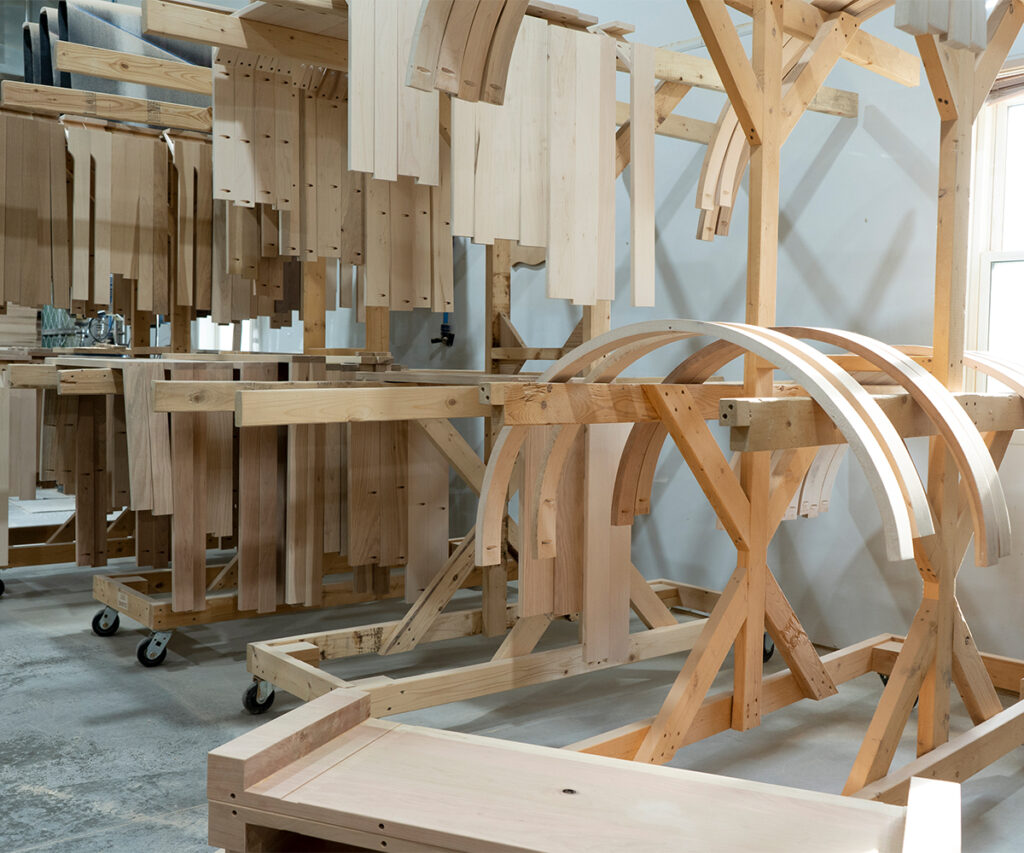
Once lumber is ready, boards are milled and cut into parts. Accuracy during milling matters because tight tolerances allow joints to fit properly and assemblies to stay square.
Different furniture types demand different machining priorities:
- Tables: require rigid bases and flat tops with clean glue joints.
- Dressers and cabinets: require square cases to keep doors and drawers aligned.
- Beds: require strong rails and reliable corner connections to prevent movement and loosening.
Joinery is the Structural Foundation in How Amish Furniture is Made
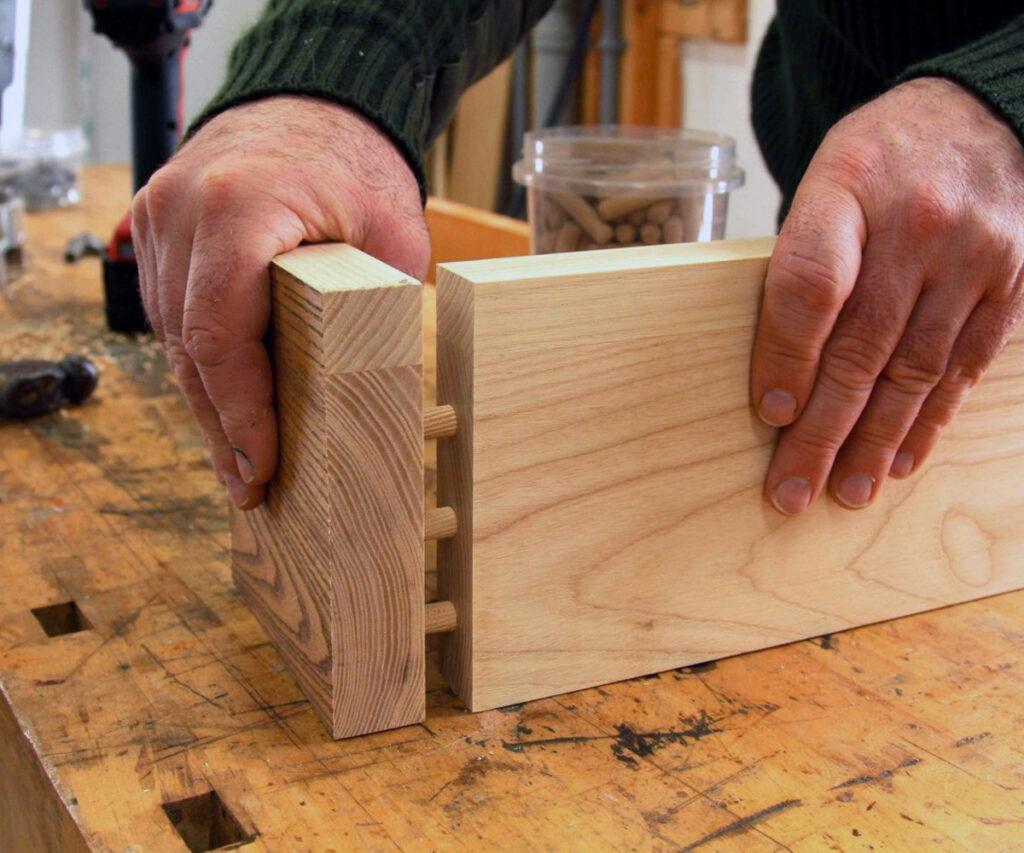
Joinery is where Amish furniture earns its reputation for strength. Majority of builders rely on fasteners as the primary structure. Amish builders commonly use wood-to-wood joints designed to stay tight for decades.
Common joinery methods include:
- Mortise-and-tenon joinery: frames, table bases, chair structures, and bed rails
- Dovetail joinery: drawer boxes, where repeated opening and closing can stress weaker connections
- Frame-and-panel construction: cabinet doors and side panels, allowing seasonal movement without splitting
These joints distribute stress through the geometry of the wood itself, creating a structure that stays tight under daily use.
Assembly Focuses on Alignment, Squareness, and Consistency
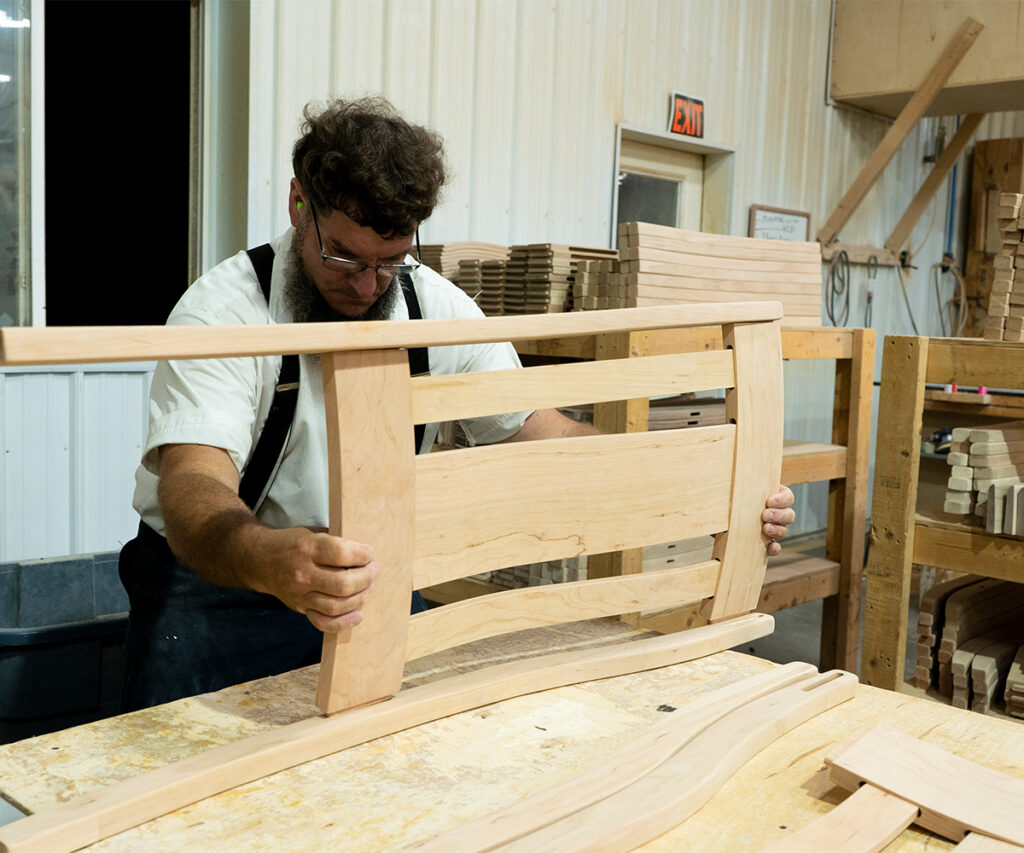
After joints are cut and test-fit, furniture is assembled with glue and clamping. Alignment is critical. A cabinet even slightly out of symmetry can lead to doors that do not hang evenly and drawers that rub or bind.
Quality shops build in checkpoints during assembly to confirm:
- cases are square
- joints close tightly
- reveals (gaps around doors/drawers) are consistent
- excess glue is removed before it hardens and affects finishing
Sanding and Detail Refinement Shape the Final Feel
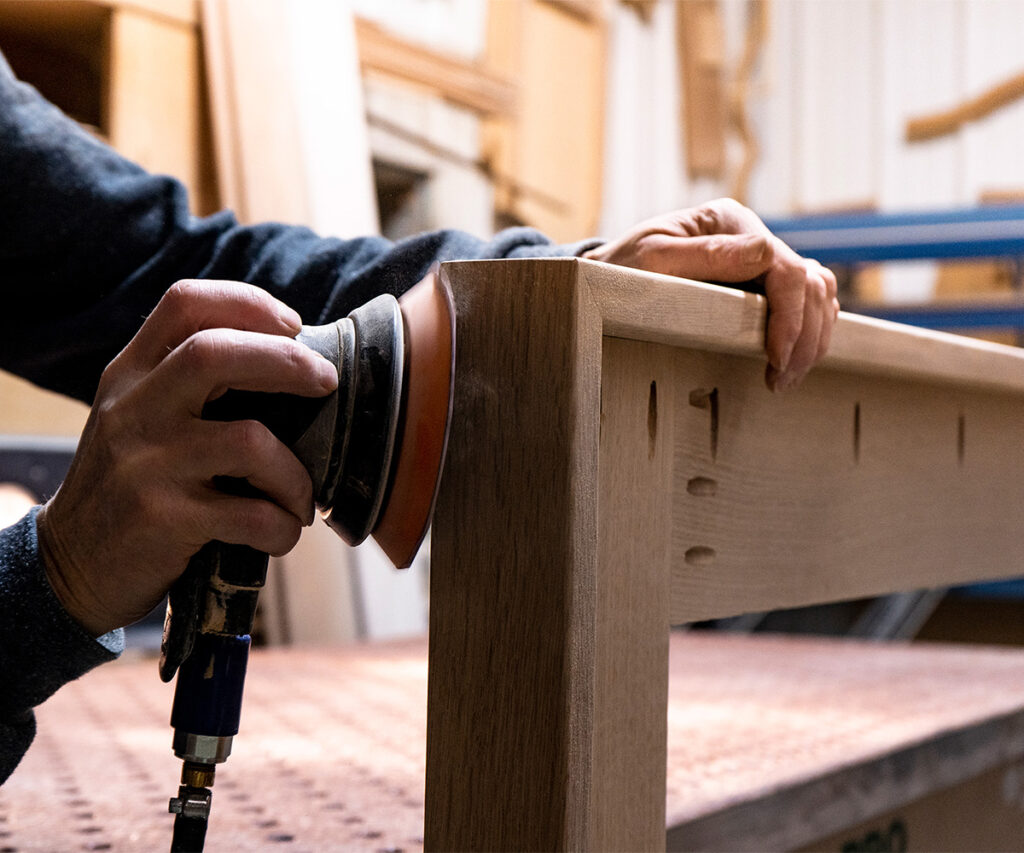
Surface preparation is one of the most labor-intensive steps, but is worth the work. This is one of the clearest signals of quality. Amish furniture is typically sanded through multiple stages to remove tooling marks. These tools create consistent smoothness across flat surfaces, edges, and curves.
This stage also refines the details that affect daily experience:
- eased edges along tabletops and chair arms
- consistent transitions on trim and moldings
- smooth contact points on frequently handled areas
- clean lines where parts meet, especially on doors and drawer fronts
A well-prepped surface supports a more even stain and a smoother, more durable topcoat.
Stain and Topcoat Provide Color and Long-term Protection
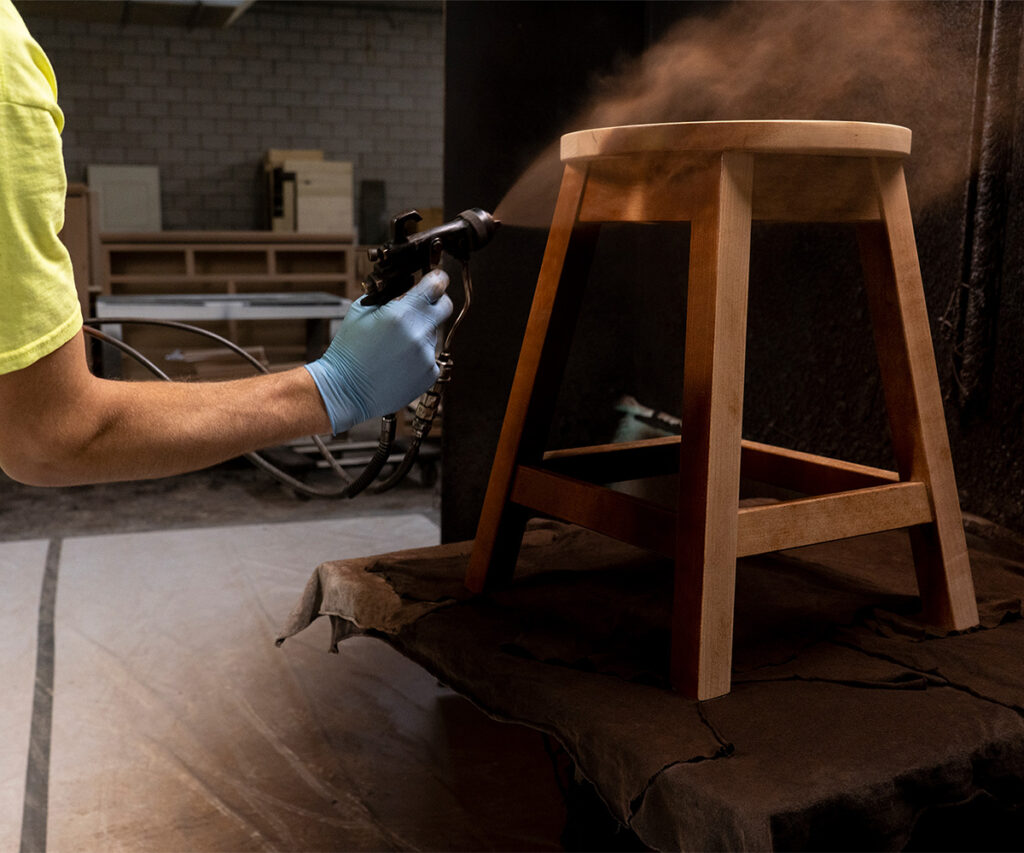
Finishing gives furniture its final tone and protects it from wear. A finish system typically includes a final sanding, stain, sealing, and multiple topcoats.
Wood species play a major role in how a piece is finished. Some hardwoods display strong grain contrast, while others offer smoother, subtler patterning. Color selection changes the way grain reads as well.
Our design and color selection approach at Twin Brook Furniture is meant to help align wood species and stain tones with surrounding finishes. This extra measure makes the final result more predictable and cohesive.
Final Fitting and Inspection Confirm Function
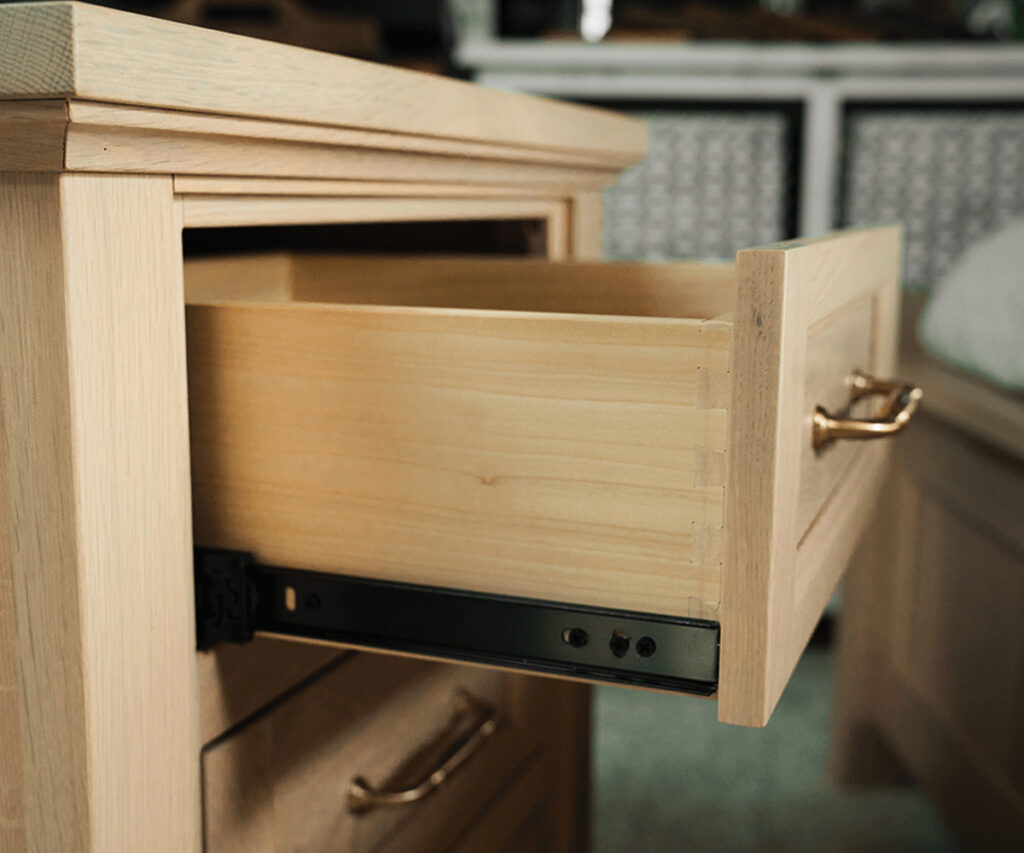
After finishing, furniture is assembled with hardware and checked for performance. This includes:
- drawers fit and smooth operation
- doors swing and have even spacing
- hardware aligns
- tabletop flatness and secure attachments
- tight fit for stable connection points
The final inspection is where small adjustments are made before delivery to ensure your piece is in the perfect condition.
Twin Brook Furniture Supports the Process through Selection, Ordering, and Showroom Guidance
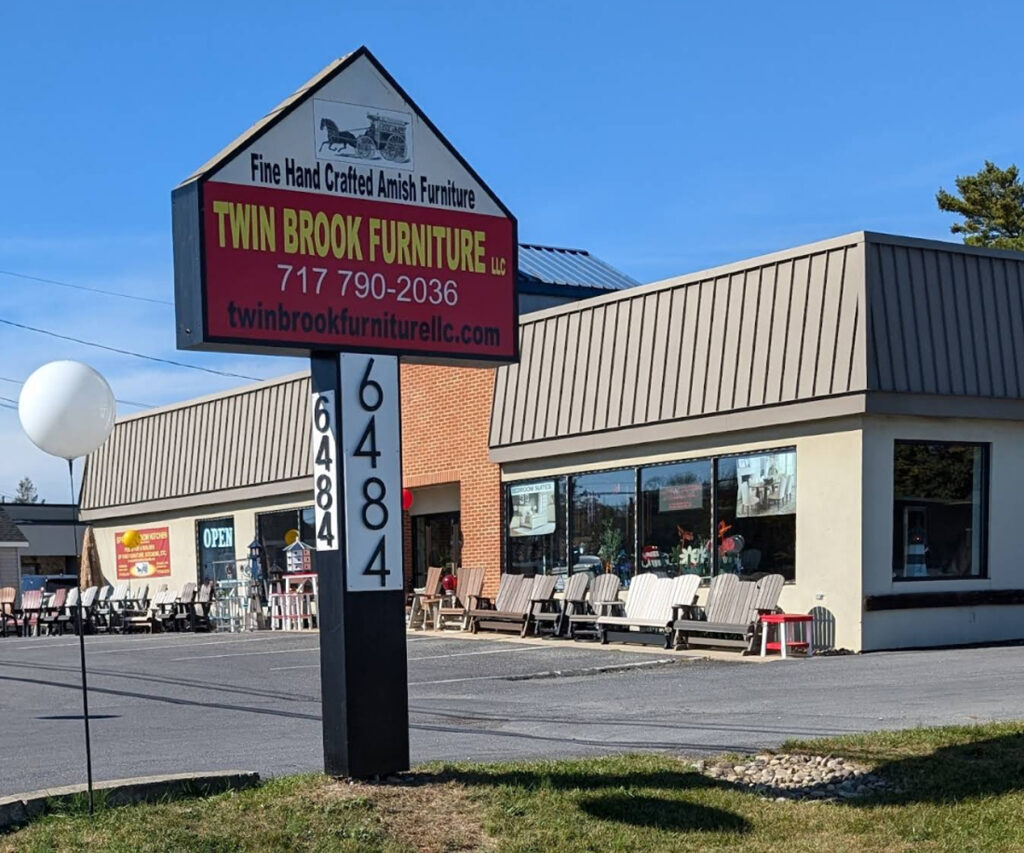
At Twin Brook Furniture, our role is to connect you with Amish craftsmanship while keeping the buying process clear and straightforward. We help you narrow down the details that matter most so you can choose confidently.
For custom orders, we’ll typically ask for your dimensions and what you want your finished product to look like. From there, we translate your needs into a clear build plan that an Amish shop can execute with precision.
While we do list our products online, you’ll get the full experience when you visit us in our Hunt Valley or our Mechanicsburg showroom where we offer guidance to find the perfect piece that fits your home.
A Simple Summary of the Amish Build Process
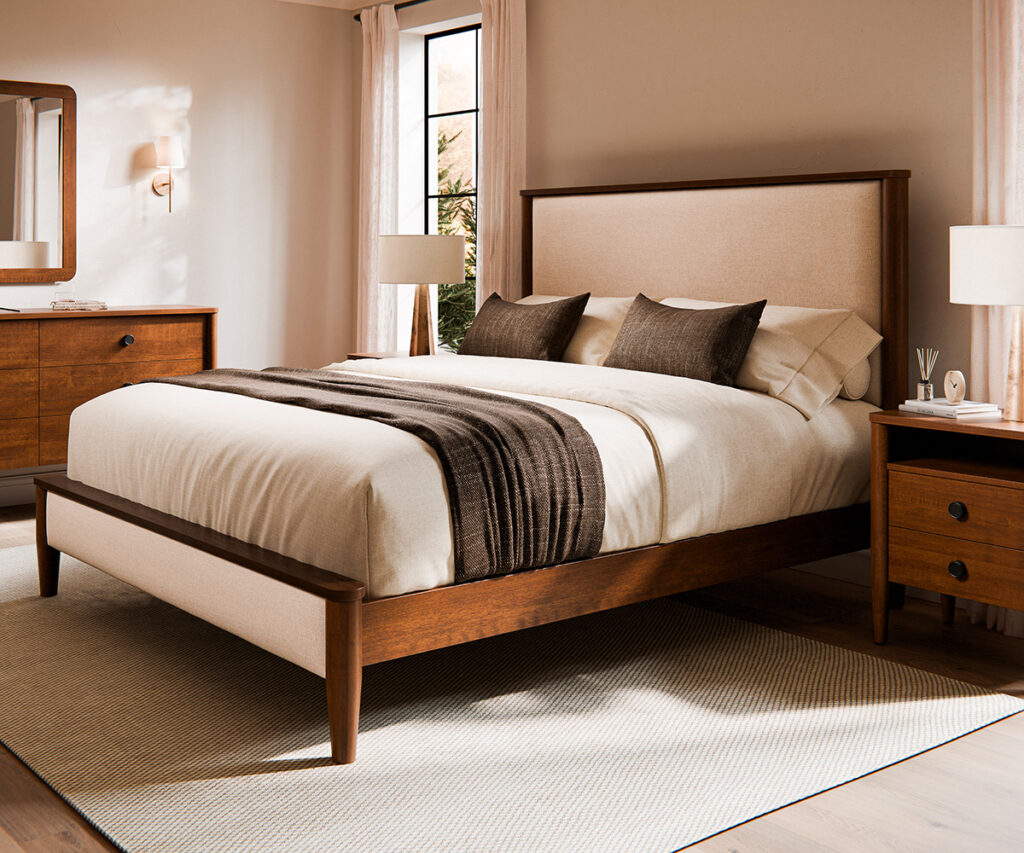
In our experience, Amish furniture quality is strongest when three areas are done well:
- Stable hardwood and proper drying
- Strong joinery and square assembly
- Thorough surface prep and protective finishing
When those steps are handled consistently, furniture becomes not a only a short-term replacement, but a long-term part of your home.